Shore Diligence: What to Know Before You Buy Down the Shore
On a barrier island, the asking price is sometimes the least interesting number on the page. Two homes a block or two apart can carry the same list price, look fairly similar, and still turn out to be completely different investments. The difference rarely shows up in the listing photos. It shows up in what the deed says you actually own, the flood map, the insurance quote, what’s buried in the yard, what the zone will let you build in the future, and the math you run before you ever write an offer.
It’s the due diligence the Shore demands — and you don’t have to be an expert in any of it. You just have to know the questions exist, when to ask them, and the right team to help you with the task.
What You Actually Own — and Which Documents Say So
Start here, because it touches more first-time Shore home buyers than anything else on this list.
"Duplex" and "townhouse" describe building types, not ownership. "Duplex" tells you exactly one thing — the building holds two units. It does not specifically tell you about what you'd own. Here's the tell that does: if one unit of that building is for sale on its own — and at the Shore, that's how duplexes trade 99% of the time — there's a condominium structure underneath it. Two owners, one small association, one recorded master deed governing both halves. Two buildings that look identical from the street can carry completely different answers on what you own, what you maintain and insure, what you pay in fees, and whether and how you can rent — and the listing won't tell you which is which. The paperwork will.
So know which paperwork to ask for. Your individual deed — the document that transfers the property to you at closing — mostly does exactly that: transfers title. The operating rules live one level up, in the recorded master deed, the site plan that maps the units, and the association bylaws. That's the package your agent pulls before you write the offer — not just the deed.
Duplexes and Townhouses: Know Who Gets What
When you're buying a unit of a duplex or townhouse, the shared and reserved pieces should be designated in the master deed and mapped on the recorded plan:
Driveway and parking — often the first thing neighbors fight over; confirm whose is whose, on paper.
Side yard and outdoor space — shared, split, or exclusive to one unit?
Storage, sheds, basements — easy to assume, costly to assume wrong.
Your porch or balcony — the cleanest proof that the documents decide everything. If the townhouse is fee-simple — no condo layer; you own your slice of the building and the land under it — an attached porch or balcony is yours outright. If it's a condominium, the master deed makes the call, and it genuinely goes both ways: some master deeds write the porch into the unit itself — yours, full stop — while others make it a limited common element, yours to use exclusively but legally part of the common shell, with the master deed also deciding who pays the upkeep. Same porch, different answers — and every one of them lives in the paperwork.
Condominiums: The Master Deed Governs
Everything above scales up. Whether it's a two-unit building or a full complex with a professional association, a recorded master deed sets the rules. You generally own everything inside your walls; the structure, roof, and grounds are common elements the association maintains; and a balcony or assigned parking is a limited common element — yours to use, but technically common, with the master deed assigning upkeep. Two quick things to check: the fees (never assume what they cover — get the budget) and any rental restrictions in the master deed or bylaws, which for an investor can make or break the math.
A Word on the Waterfront
If you’re buying on the water, a few ownership wrinkles come before everything else. You’ll need to understand the cost of maintaining and eventually replacing bulkheads, plus a surprise that catches a lot of buyers off guard: on the water in New Jersey, you don’t automatically own the land under it. The state can hold what’s called a riparian claim on it — and securing a riparian grant can affect your dock, your bulkhead, and sometimes your title. And a boat slip isn’t a given — some bay properties have a deeded dock, some share one, some have none, and a slip that exists still has to actually fit your boat’s length and draft. None of that is a reason to avoid the bay; it’s only a reason to understand exactly what you’re buying and what you’re looking for.
Flood Zones: The Cost You Can’t See on the Listing
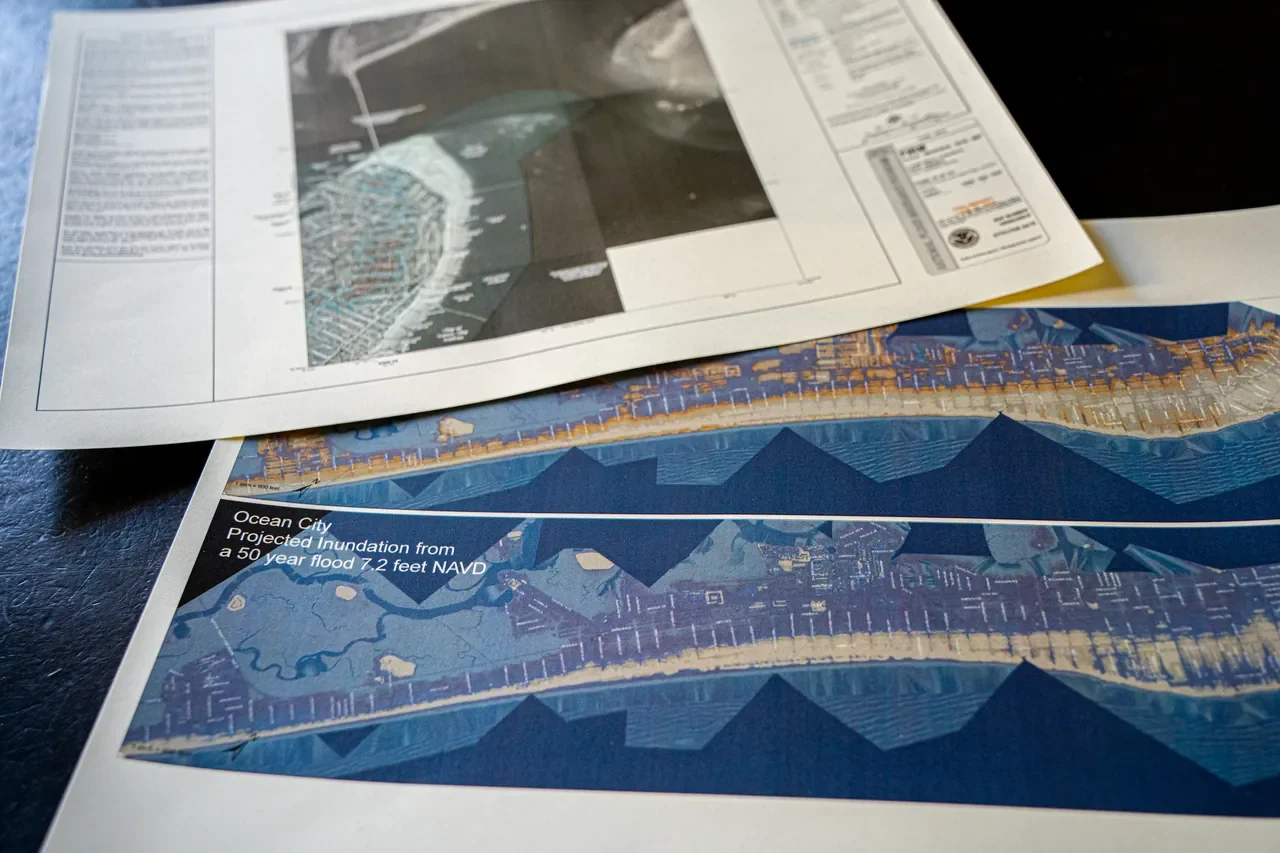
Now to the one that’s most specific to the coast. Every barrier-island buyer should understand a simple market truth: flood-prone areas affect resale value. Plenty of excellent Shore properties sit in a flood-prone area — the trap isn’t the flooding itself, it’s treating the upfront price as the whole story. A home priced attractively in a flood zone still carries that designation every year you own it, in insurance cost and in the discount the next buyer will expect when you go to sell.
One thing to note: flood-insurance pricing is in a bit of flux right now. It used to be simple — your zone set your rate. Now federal pricing is property-specific: your elevation, your distance to the water, your structure. Two homes in the same zone can carry very different premiums. So the zone still does two things — it determines whether you’re required to carry flood insurance, and it shapes how the home has to be built — but it no longer tells you what coverage will actually cost you. That number comes from a quote on the specific property, and it’s worth getting one early, because it can swing more than buyers expect.
Insurance, and What’s Actually Changing
Here’s the piece most people miss: flood and homeowner’s are separate policies, and on the coast it’s the homeowner’s side that’s quietly getting harder. Wind, named-storm deductibles, and proximity to the water are all live factors, and after years of storms up and down the eastern seaboard, some carriers have pulled back from writing coastal homeowner’s policies at all. Talk to a broker early and get real numbers for your target towns and price range.
What an Older Home Might Be Hiding
The older homes down here have a character the new builds can’t fake — and a few quirks specific to how these towns were built. Quick things to have on your radar:
• Buried oil tanks — old homes that were heated with fuel oil sometimes left the underground tank behind when they switched to gas. A tank sweep finds it; removal (and cleanup, if it leaked) is usually negotiable onto the seller.
• Asbestos siding — common mid-century cement siding. Intact and sealed, it’s a relative non-issue; it only matters if it’s damaged, and it costs more to remove at re-side time. Price it in.
• Shared water or sewer lines — in some older sections two or more homes share a line to the main, and it’s the homeowners’ cost to separate the lines. A camera scope at inspection surfaces any such issues.
Newer construction has generally worked these issues out, so it’s far more an older-home question than a Shore-wide question — and none of them are usually deal-killers. All are just cheaper to learn about before you buy than after you buy.
What You’re Allowed to Build: Zone, Map, and the Buildable Lot
Here’s a question underneath nearly every long-term value decision at the Shore, and an easy one to skip: what does this property’s zone actually let you do with it down the road? Every lot sits in a zoning district that sets the rules — how big you can build, how close to the lines, how many units, what’s permitted at all — and in Ocean City that map is a mosaic that can change from one block to the next.
It matters most the day you want to change something. A lot of older Shore homes were built before today’s rules and technically don’t meet them — bigger footprints, smaller setbacks than current codes allow. They’re usually grandfathered in, so they’re perfectly legal to own and live in as-is. But a variance might be needed to build in a way the current rules don’t allow — meaning the zoning board’s approval: application, plans, a public hearing, and a board that can say no. By no means automatic. And in historic districts, like parts of Cape May and Ocean City, much of what you can do with exterior work or new construction is subject to approval by a review committee. Less of an issue if you’re not planning any future major renovation or new construction, but all things to be aware of when buying an older home.
Pro tip: one hour with a local land-use attorney who knows that town’s board can save you real time and money — the good ones know the answer before you ask.
None of This Should Scare You Off
Here’s the thing to hold onto: none of it is a reason not to buy at the Shore. It’s just the difference between the different types of homes you can buy here. Every item on this list is knowable, and every one is something the right people — an agent who knows these islands, an inspector, an attorney, an insurance broker — handle as a matter of routine.
A strategy session allows us to walk through a specific town, a specific block, and your specific situation to determine what makes the most sense for you in this market. Book one and start ahead of this market instead of learning it on the job.
Michael Petretta is a licensed New Jersey real estate salesperson with Keller Williams Jersey Shore. Content is for informational purposes only and is not legal, financial, or tax advice.